

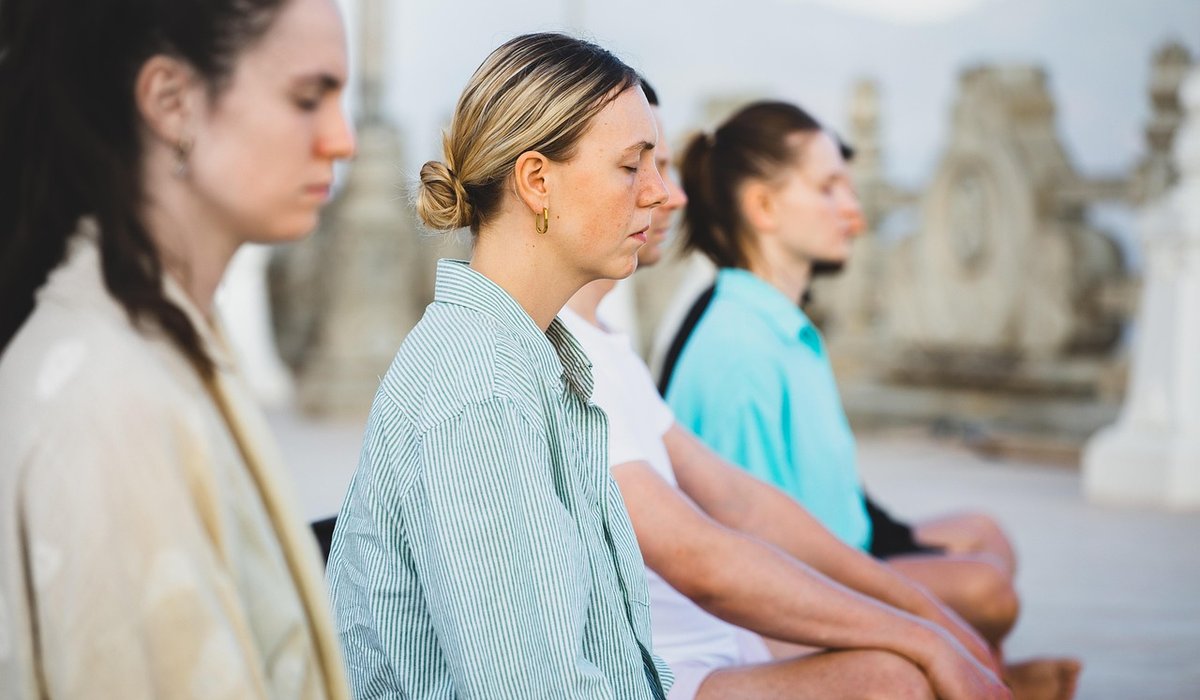
A city centre at nine in the morning can feel like a wall of noise. Buses idling, delivery vans, the clatter of a thousand conversations, alarms, drills, the tinny leak of someone else's headphones. For a photographer, that overload is often the problem: there is too much to look at and we respond by rushing, snapping at whatever we pass and moving on before we have really seen anything.
Mindful photography asks you to do the opposite. Instead of trying to capture the whole of a place, you look for the quiet corners inside it — the sheltered, overlooked, undramatic places that most people walk straight past. These corners reward attention rather than speed. They also happen to be very good for you. Standing still for a while, breathing slowly and looking carefully is a simple, evidence-backed way to settle a racing mind, and a camera gives you a reason to do it.
The single easiest way to find stillness in the centre is to arrive before it does. Between roughly 5.30am and 7.30am in summer (and 7.30am until 9am in winter, when the sun rises late), you get soft light, empty pavements and a city that feels strangely yours.
If early mornings simply don't fit your life, the same quiet arrives in the last hour of daylight and in the half hour after the shops close, when the workers have gone and only the people who live there are left.
Every city centre has a spine of shops and traffic that everyone uses. Your job is to step one street sideways. The parallel lane, the service alley, the cut-through behind the bank, the flight of steps down to a canal — these are the places where a city shows its seams, and where you can photograph without competing with crowds.
Look for:
Once you are there, give yourself permission to photograph the ordinary: a fire escape, a painted sign, moss in a gutter, a chipped tiled doorway. These small details carry the atmosphere of a place far better than a wide shot of a shopping street ever will.
The centre of most British cities is a patchwork of enclosed spaces that were never designed to be busy: cathedral closes, churchyards, Georgian squares with railings, hospital quadrangles, covered markets, Victorian arcades, museum courtyards and the paved squares behind civic buildings. They are usually open to the public during daylight and they muffle the traffic noise almost completely.
These spaces are also where the light behaves best. A courtyard gives you tall walls as reflectors, a patch of sky above, and shadows that draw slowly across the stone as the morning moves on. You can sit on a bench or a low wall, put your camera down, and simply watch the light change for ten minutes before you lift it. That pause is not a delay to your photography; it is the photography.
Mindful photography is mostly a matter of timing yourself differently. A few practical habits make the difference:
Carry light kit — one lens, or just a phone. A bulky bag makes you feel like you are working. The point is to be a person standing quietly in a place, not a photographer on assignment.
Choose one route and repeat it once a week for a month. Familiarity is an advantage here: you stop hunting for something new and start noticing the small changes — the light shifting earlier each week, a shop sign repainted, leaves gathering in a corner. Twenty minutes is plenty. Ten minutes is enough if that is all you have.
Over time, you will build a personal map of quiet corners in your city, and a reliable way of finding calm in the middle of it. The photographs will improve, but that is a side effect. The real reward is the hour of steady, unhurried attention — and you get to keep that whether you press the shutter or not.

Zen Photographic Simple, genuine and looked after with care — the kind of place worth returning to.

Zen Photographic Real stories, useful guides and the occasional recommendation, all in one calm corner of the web.

After rain, pavements and windows become mirrors that soften harsh lines and offer abstract compositions full of colour and calm.

Comments
ALina Kelian
19th May 2018 ReplyZen Photographic An honest, everyday look at the things that make life a little better — with advice you can actually use. ullamco laboris nisi ut aliquip ex ea commodo consequat.
Rlex Kelian
19th May 2018 ReplyZen Photographic Written for people who value the details, and want honest guidance they can trust. ullamco laboris nisi ut aliquip commodo.
Roboto Alex
21th May 2018 ReplyZen Photographic Written for people who value the details, and want honest guidance they can trust. ullamco laboris nisi ut aliquip ex ea commodo consequat.