

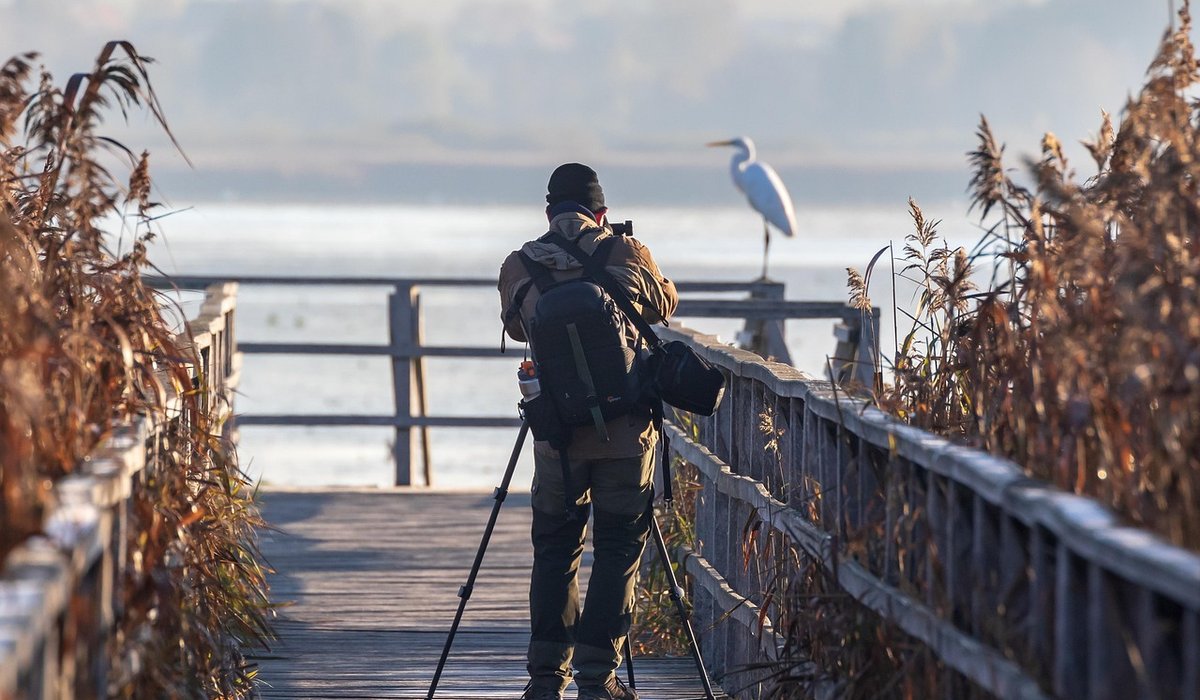
Stand at the edge of a country footpath and something happens without you deciding it. Your gaze begins to walk. It follows the ruts, steps over the stile, drifts towards the gap in the hedge. You are being led, gently, by a line.
Photographs work on us in much the same way. A path, a fence, a riverbank or the kerb of a quiet street acts as an invitation: it tells the viewer where to begin, how quickly to move, and where to come to rest. Place those lines thoughtfully and an ordinary scene becomes a small journey. Place them carelessly and the eye wanders off, restless and unsatisfied.
Mindful photography is less about hunting for impressive subjects than noticing what already guides your attention. Lines are the quietest guides of all, and learning to lead with them is one of the kindest things you can do for the person looking at your picture.
Give yourself two minutes with nothing in your hands. Walk the scene with your eyes only, and ask three plain questions:
Only then raise the camera. That small delay is the whole practice in miniature: attention first, shutter second.
Height matters more than most people expect. A footpath photographed from standing position looks flat and ordinary, because you are looking down on a line running away from you. Lower yourself to knee height and the same path stretches, reveals its texture and gathers the sky behind it. Try three heights — standing, crouching, and camera resting on the ground — and notice how each changes the pace of the image. The lower you go, the more the viewer is invited to walk.
The edges of your photograph are doors. A path entering at the bottom-left corner feels energetic and informal; the eye steps in and starts moving at once. A path entering at the bottom centre feels formal and calm, which is why it suits tree-lined avenues, churchyards and long driveways — places where symmetry is part of the subject.
How a line leaves matters just as much. A path that slips out at a corner suggests continuation, as though the walk carries on beyond the print. A path that stops dead at the middle of the bottom edge can feel unresolved, like a sentence without an ending. A single strong line cutting corner to corner can be bracing, but it is also quite shouty; if you want calm, soften the angle slightly or leave a little breathing space beside it.
Be careful what you point at, too. A line is an arrow, and arrows imply a destination. Let your path lead towards a single tree, a gate, a distant hill or a figure in the middle distance. If it leads to an empty patch of grass, the viewer arrives there and feels quietly let down. Wait a moment for someone to walk into the gap — the wait is part of the practice.
Straight-built lines — post-and-wire fencing, drystone walls, railings, rows of tree trunks — bring rhythm rather than flow. The eye hops from post to post, and that small repeating beat gives an image a sense of order and quiet.
When the light is low and the shadows long, a wall casts its own parallel line. Those paired lines — solid and shadow — are worth waiting for.
Curves are slower than straight lines, and that is their gift. A river bending through a valley takes the eye on a meander rather than a march, which is why water so often produces photographs that feel restful rather than urgent.
Position yourself so the bank sweeps from lower-left towards upper-right, the direction most eyes travel naturally when reading an image. Reflections double the line, giving you two curves for the price of one. Get low, close to the water, and the surface does much of the work; a slightly slower shutter speed will soften small ripples into something silkier and more contemplative.
If the curve folds back on itself in an S, resist the urge to fit the entire sweep into the frame. Sometimes a gentler fragment, entering and leaving without fuss, reads more calmly than the full panorama — and leaves something to the imagination.
When you lead the eye with care, you are doing something quietly generous. The viewer never knows they have been guided; they simply feel calm, unhurried and curious about where the path goes. Which is, very often, exactly what you were feeling when you pressed the shutter.

Zen Photographic Simple, genuine and looked after with care — the kind of place worth returning to.

Zen Photographic Real stories, useful guides and the occasional recommendation, all in one calm corner of the web.

Early light wraps petals and leaves in gentle shadows, making it easier to capture delicate colours without harsh contrast or blown highlights.

Comments
ALina Kelian
19th May 2018 ReplyZen Photographic An honest, everyday look at the things that make life a little better — with advice you can actually use. ullamco laboris nisi ut aliquip ex ea commodo consequat.
Rlex Kelian
19th May 2018 ReplyZen Photographic Written for people who value the details, and want honest guidance they can trust. ullamco laboris nisi ut aliquip commodo.
Roboto Alex
21th May 2018 ReplyZen Photographic Written for people who value the details, and want honest guidance they can trust. ullamco laboris nisi ut aliquip ex ea commodo consequat.